
“A good baseball coach can change a game. A great baseball coach can change a life.”
Just like baseball players, coaches need shoes they can actually trust for a full practice or a doubleheader.
I’ve spent a lot of seasons on the field, and coaching is a lot more running than people expect. You’re hitting fungoes, chasing down loose balls, and hustling between the dugout and the mound. There are plenty of great cleats made for players, but that’s not really what a coach needs.
So what should coaches actually wear? Do you need real baseball cleats, or is there something better?

Here’s the short version. Your shoes need to work on the dirt, on the grass, and in the dugout or pavilion, so regular metal-spiked cleats aren’t the move.
I put together this list of the best shoes for baseball coaches in 2026, mixing molded cleats and turf trainers, so you can find a pair that gives you comfort, traction, and support no matter where practice takes you.
Top 6 Baseball Coaching Shoes Reviews
Here’s my full breakdown of six pairs worth your money this season. I’ve covered molded cleats, turf trainers, and a couple of newer releases that weren’t around the last time I updated this list.
1. Under Armour Men’s Leadoff Baseball Shoe

I can recommend this Under Armour pair to coaches any day. It has almost everything you need for a full day on the field.
The shoe looks sharp, so you’re not stuck wearing something that looks like it belongs in a hardware store. Traction is never an issue either, thanks to the rubber molded cleats that grip the dirt and grass without digging in too deep.
It’s a low-top design, so you can change direction fast when you’re jogging out to the mound or backing up a play.
The molded cleats spread the pressure out evenly under your foot, so your feet aren’t barking at you by the third inning.
Comfort-wise, Under Armour added a thick, padded insole plus a padded collar around the heel, so stepping in and lacing up doesn’t feel like a chore.
The upper mixes mesh with synthetic material. The mesh keeps your feet breathing, and the synthetic panels hold up to wear and tear over a long season.
The rubber outsole flexes well and holds up on most surfaces, including softer, muddier ground after a rain delay.
There’s also a durable overlay on the toe for extra protection, and Under Armour offers it in a handful of solid color combos, including black/white, red/white, and royal/white.
2. New Balance Men’s Fresh Foam 3000v7 Turf-Trainer
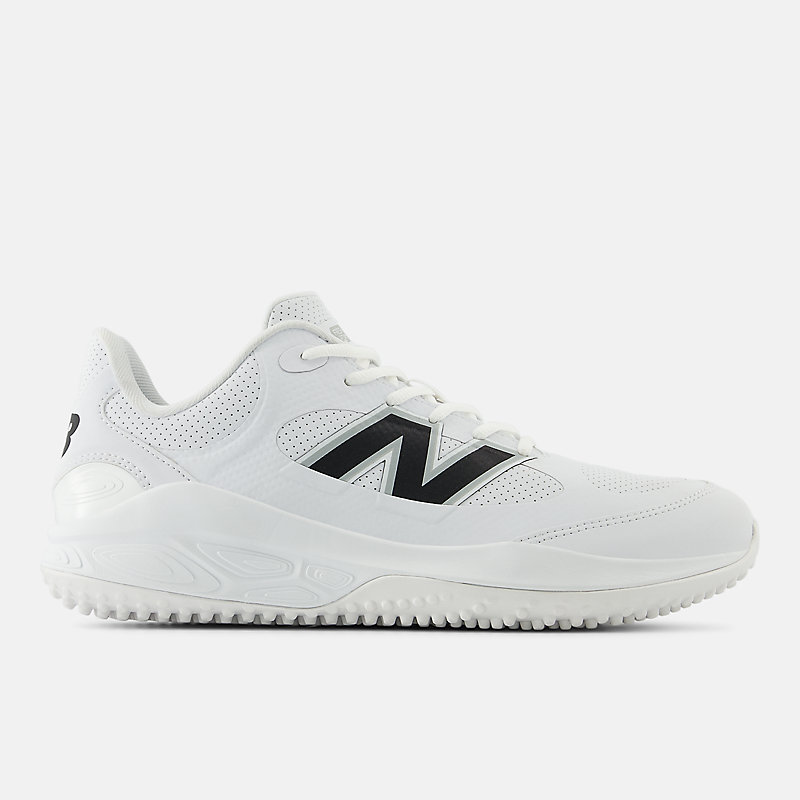
This is the current version of a turf trainer I’ve recommended for years, and it’s my pick for coaches who spend most of their time running drills on turf rather than a grass infield.
The upper is synthetic and mesh, so it breathes well and you’re not dealing with soggy feet after warmups on a hot afternoon.
New Balance updated the midsole to their Fresh Foam X cushioning, which feels noticeably softer underfoot than the older 3000-series shoes I used to recommend here. It’s a mid-top, so you get a bit of ankle support without losing the ability to move freely in any direction.
There are no raised cleats on the outsole, just a nubbed rubber pattern built for turf and hard-packed dirt, so you can wear these straight from the dugout to the field without changing shoes.
Coaches who’ve worn these tell me the toe box breathes better than most turf shoes in this price range, and your foot stays locked in place when you’re sprinting to break up an argument at second base.
It comes in several colorways, so you can match your team’s gear if that matters to you.
3. Nike Men’s Alpha Huarache Baseball Shoe

Nike built this one for coaches who want a shoe that’s going to last more than one season. The leather upper is sturdy, so it holds up to daily use a lot better than a mesh-heavy shoe would.
Leather usually means less breathability, but Nike added perforated holes across the upper so your feet aren’t sweating it out by the fifth inning.
It’s a low-top, so you get good maneuverability, and the rubber molded cleats give you solid traction when you’re showing players how to break toward first.
The full-length cushioned midsole takes the edge off stud pressure and spreads your weight out evenly, which matters if you’re on your feet for hours at practice.
Nike’s stud pattern is built for durability and grip, and the synthetic outsole keeps things flexible without sacrificing traction.
Overall, this is a dependable pick if you want something comfortable, breathable, and durable that still grips well on most surfaces.
4. Mizuno Men’s Dominant 4 Low Turf Baseball Shoe
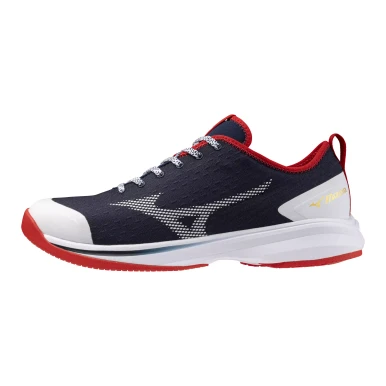
Mizuno updated their Dominant line to the version 4, and this low-cut turf model is exactly what I’d point a coach toward if comfort and all-day stability are the priority.
The big change here is Mizuno’s newer midsole foam, which they call Enerzy Core. It feels noticeably softer and more responsive than the older Dominant models, without turning mushy underfoot.
There are no raised cleats, just a lightweight outsole built for turf and hard surfaces, so you get good traction without the stud pressure you’d feel in a metal or molded cleat.
The upper uses a no-sew, woven construction that flexes with your foot instead of fighting it, and it’s noticeably lighter than the older version I used to recommend here.
If you split your time between the turf and the dugout, this is one of the more comfortable, low-maintenance options out there right now.
5. Adidas Men’s Icon V Bounce Baseball Shoe
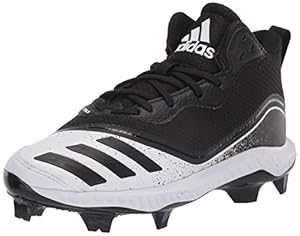
This pair has rubber cleats built for solid traction, and if you’d rather stick with a big, trusted brand, Adidas’s Icon V Bounce is a safe bet.
It’s a high-top, so you get real ankle support, which cuts down on rolled ankles when you’re moving side to side on uneven ground. It feels snug right out of the box, too.
There’s padded cushioning around the sides and underfoot, so your heel stays locked in and you can move without your foot sliding around inside the shoe.
I like the mix of mesh and synthetic material on the outer. It holds up well and still breathes better than you’d expect from a high-top.
The rubber cleats are placed to help you plant and change direction quickly, which matters when you’re demonstrating footwork to your infielders.
The tradeoff is weight. Between the high-top design and the sturdier build, coaches who wear these all day sometimes notice the extra heft by the end of a long practice. Still, it’s a solid, durable pick if traction and ankle support are what you care about most.
6. New Balance Men’s FuelCell 4040v8 Turf-Trainer
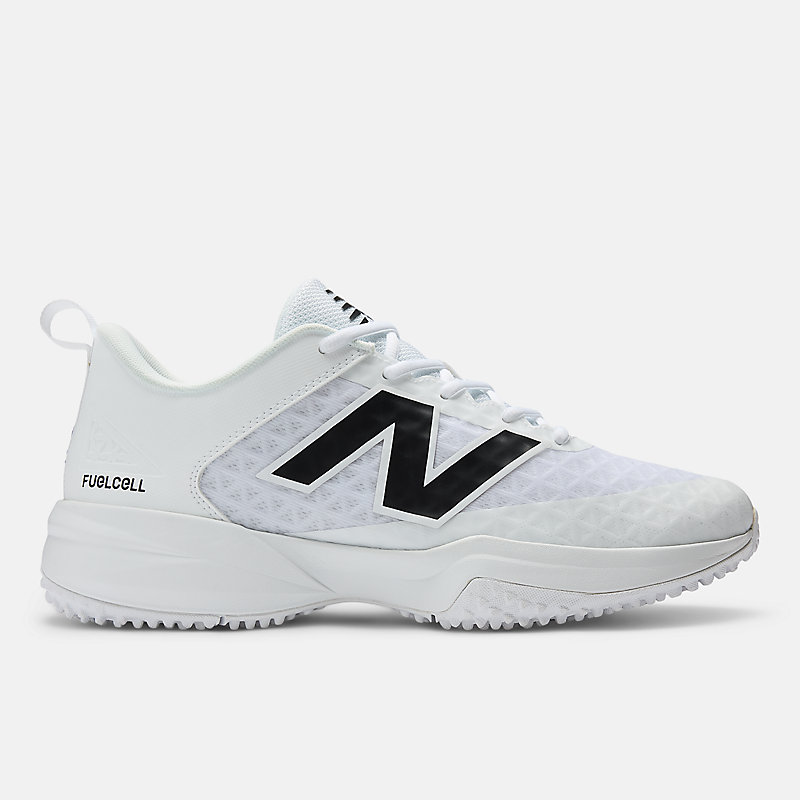
This is a newer release from New Balance, and I added it to the list because it’s a genuinely different feel from the Fresh Foam trainer above, not just another color option.
Instead of Fresh Foam, this one runs on New Balance’s FuelCell midsole, which has more bounce and a springier, more responsive feel underfoot. If you’re on your feet all day and you like a little more pop in your step, you’ll notice the difference right away.
The upper is a no-sew build using TPU film over a double jacquard mesh, so it’s lightweight and holds its shape without a lot of stitching that can wear out over time.
Like the other turf trainer on this list, there are no raised cleats, just a nubbed outsole made for artificial turf and packed dirt, so it’s a great option if most of your coaching happens on a turf field or in an indoor facility.
It’s a comfortable, low-top shoe that’s easy to slip on and off between drills, and it’s quickly become one of the more popular turf trainers among coaches I know.
Best Shoes For Baseball Coaches – Buying guide
Wearing the right shoe matters if you want good traction and a full day on your feet without pain. As a coach, you’re running constantly, showing players how to hit, how to field, and how to deliver a pitch. Here’s what to look for when you’re picking out baseball coaching shoes.
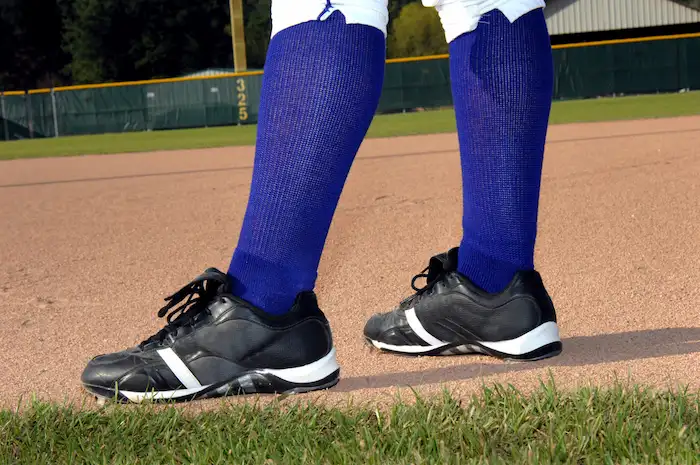
Material And Construction
Coaching shoes are usually made from synthetic material, genuine leather, or a mix of both. Genuine leather feels more breathable and supple over time, and it tends to hold up a bit longer too.
Synthetic shoes are lighter and dry out faster, which I like if you’re newer to coaching and still figuring out what you prefer. If you’ve been coaching for years, you probably already know whether you’re a leather person or not.
Ankle Support
Baseball shoes come in three basic cuts: high-top, mid-top, and low-top. High-tops extend up over the ankle and give you the most lateral support.
That said, I don’t usually recommend high-tops for coaches, since they restrict movement more than you’d want during a full day of drills. Mid-tops are a nice middle ground. You get decent support without losing much mobility, which is why most coaches I know end up here.
Low-tops are the fastest option, but stability takes a hit, so they’re better suited to coaches who move a lot and don’t mind trading a bit of ankle protection for speed.
Type Of Cleats
No search for the best baseball coaching shoes is complete without talking about the type of cleat. Here’s a quick rundown of the common options.
Molded Plastic Cleats
Molded rubber and plastic cleats are permanently attached to the sole, and they’re stable and tough. You can wear them on asphalt, concrete, or turf without worrying about the cleats wearing down fast.
They’re also cheaper than metal cleats and work well in muddy or soft conditions. Most baseball and softball coaches I know stick with molded cleats for exactly these reasons.
Metal Cleats
Metal spikes are great out on the field, but not on the pavilion, dugout floor, or any hard surface. Shoes with metal cleats give you the best traction and the fastest movement.
The downside is the spikes wear down over time, and metal isn’t ideal for a coach who’s constantly walking between the field, the dugout, and the parking lot. If you want to go deeper on how metal spikes stack up against other cleat types, including how baseball cleats differ from soccer cleats, I broke it all down in my soccer cleats vs baseball cleats comparison.
Turf Shoes
The turf trainers I recommend for younger players use the same idea coaches benefit from: no raised cleats, just a patterned outsole that grips turf and hard-packed dirt.
If most of your time is spent on turf helping new players learn the game, a turf trainer is probably your best bet.
Size
When choosing your size, make sure your heel fits snugly, with at least a quarter inch of space left around your toes.
Every brand runs a little differently, so check that brand’s own size chart and measure your foot before you order, rather than assuming your size in one shoe carries over to another.
Comfort
Go with a pair that’s genuinely comfortable so you can focus on your players instead of your feet. Look closely at the inner cushioning and make sure the shoe supports your foot the way you need it to.
Every pair I reviewed above is comfortable enough for a full day of coaching, so you really can’t go wrong picking any of them.
Budget
Baseball coaching shoes run anywhere from around $50 on the low end up to $100 or more for the newer turf trainers with updated foam midsoles. Set a budget before you shop, and stick to established brands that deliver real comfort, breathability, and traction for the price.
Conclusion
That’s my rundown of the best shoes for baseball coaches in 2026, covering everything from turf trainers to molded cleats built for grass, dirt, and everything in between.
Wearing the right pair keeps you comfortable and cuts down your risk of injury over a long season. Run through the buying guide above too, so you can zero in on the pair that actually fits how you coach.

With 4 years of Division II experience, a .272 career batting average, .410 on-base percentage, and 7 home runs, I’m now in my fifth season. I’ve played baseball since age 3, alongside future MLB Draft picks, and I aim to pursue a career in baseball professionally, be it playing, coaching, or scouting.