
I know – softball isn’t about power-hitting. With a short distance from the mound and fast pitches, simply squaring up a softball is hard enough. So most softballers lean on contact-hitting over swinging for the fences. But not everyone is built for contact-hitting. I wasn’t. More often than not, I went all in and tried for a homer. I failed a lot – but when I connected, it was worth every whiff.
Power-hitting in fastpitch softball is tough. Apart from mastering the basics and fine-tuning your swing mechanics, you need the best fastpitch softball bat for power hitters in your bag.
Now, I’m not saying a bat will turn you into the next Dot Richardson. But the right bat, matched to the right weight drop and barrel construction, can bring out the power you already have.
Most fastpitch softball bats on the market are tuned for contact hitters, because that’s the dominant playstyle. That’s why I went back through this list for 2026, cut anything that’s been discontinued or decertified, and kept only the bats built specifically for power. So when you’re in the box and you need a homer, you’ve got a bat you can trust to deliver it.

Top 7 Best Fastpitch Softball Bats for Power Hitters in 2026
While putting this list together, I ignored the generic “top-tier bat” factors you can find in any roundup and focused on what actually moves the needle for power: swing weight (end-loaded vs. balanced), weight drop, and barrel construction. These are the aspects that decide how far a ball travels off the bat. So this list is built on my own time in the cage plus how each bat scores in those categories. If you just want a quick recommendation, the “Details” section under each pick has you covered. If you want the full breakdown, keep reading, because it’s about to get interesting.
Quick comparison first, then the full write-ups below.
| Bat | Best For | Weight Drop | Barrel | Construction | Price Range |
|---|---|---|---|---|---|
| Easton Ghost Advanced | Maximum pop, end-loaded power | -8 to -11 | Composite, double barrel | Two-piece | $400-$500+ |
| Louisville Slugger LXT | Balanced power + durability | -8 to -11 | Composite, single disc | Three-piece | $400-$600 |
| Rawlings Mantra | Contact hitters who still want pop | -9 and -10 | Composite, thin outer wall | Two-piece | ~$400 |
| DeMarini CF | Big sweet spot, all-around barrel control | -8 to -11 | Paraflex Plus composite | Two-piece | $350-$450 |
| Louisville Slugger Meta | Balanced swing weight, on-demand pop | -8 to -10 | Composite, dual-wall | Two-piece | $400-$600 |
| DeMarini Prism+ | Lighter swing, still hits for power | -10 and -11 | Continuous fiber composite | Two-piece | ~$400 |
| Marucci Echo Connect DMND2 | Best value for power hitters | -8 to -11 | MDX composite | Two-piece | $250-$350 |
1. Easton Ghost Advanced Fastpitch Softball Bat
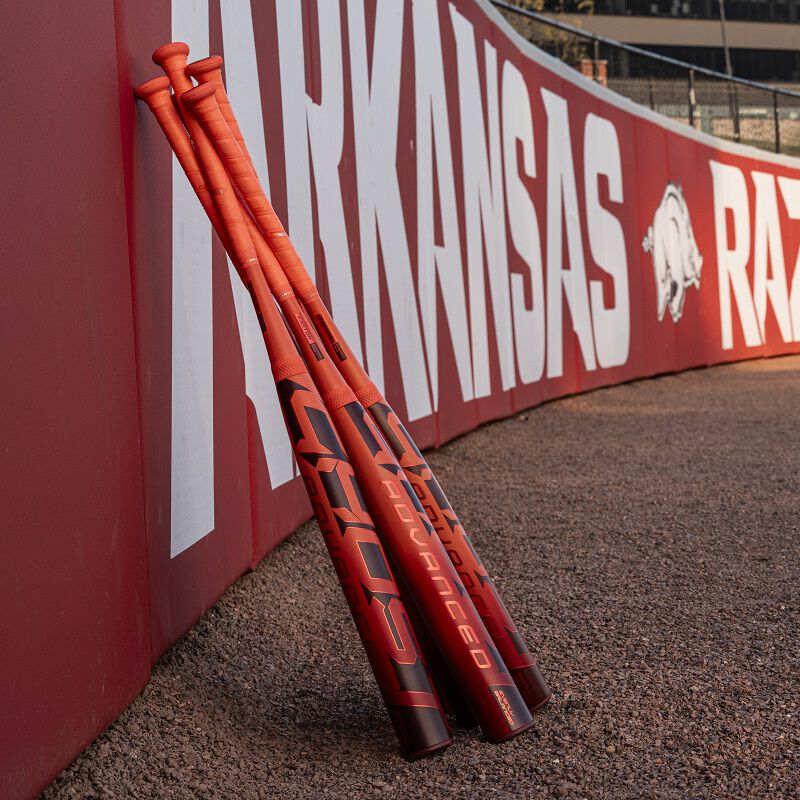
Easton isn’t a name you walk past unless you’ve never been to a fastpitch game. The brand has been a beacon of quality for newbie and veteran softballers alike.
And the 2026 Easton Ghost Advanced is still my top pick for pure power. It carries the CONNEXION EVOLUTION two-piece design forward, and Easton hasn’t messed with what already worked.
Before you invest your focus (and your money) here, you should know the Ghost Advanced is a double-edged sword.
Let me explain. This fastpitch bat has P-O-W-E-R. If your swing mechanics are strong, you can hit deep into the outfield or clear the fence entirely.
But there’s a catch. The biggest complaint – and for some people, it’s a dealbreaker – is durability. Nobody wants a $400+ bat cracking after a few games.
So yes, it’s a little scary. I never had an issue with mine. If you maintain it and use it carefully, this bat is a beast, and I’m not exaggerating.
For starters, this fastpitch bat is a two-piece. One-piece bats generally have more raw power, but the CONNEXION EVOLUTION tech on the Ghost Advanced closes that gap while adding more flex.
That extra flex is why your contact rate stays high even on mis-hits.
The Ghost Advanced also has a double-barrel design. The outer barrel is sturdy, while the inner barrel is thin and light.
That’s the standout feature of this bat, in my opinion. The strong outer wall plus thin inner wall combo gives you the best of both worlds: more power and more flex at the same time.
The increased flex reduces the vibrational sting you feel without eating into exit speed. Most balanced bats sacrifice power for that comfort. The Ghost Advanced doesn’t make you choose.
It’s an all-composite bat, so you get a bigger trampoline effect than an alloy build gives you. More importantly, it’s end-loaded. That means the end cap carries extra weight.
If you’re not familiar with the term, end-loaded bats generally have the edge when it comes to power. The added mass out at the end cap helps you turn a well-timed swing on a fastball into a home run.
The soft knob on this bat also boosts grip strength. I never dealt with a bad vibrational sting even after putting everything I had into a swing.
For a power hitter, grip matters. The better your grip, the more control you have, and the more of that power actually makes it into the ball.
Not everyone can spare the cash for a Ghost Advanced, though. It’s genuinely expensive, running $75-$100 more than most other high-end fastpitch bats.
If you’re still working on your swing and posture, don’t spend that kind of money yet.
Instead, look at the Easton Ghost Youth Fastpitch Softball Bat. It’s a much cheaper alloy bat, and while it doesn’t have the same pop as the composite Ghost Advanced, it holds up well while you’re learning.
Youth softballers, or adults still adjusting to different pitch speeds and movement, can get comfortable with this bat before stepping up.
Once your fundamentals are solid, move on to the Ghost Advanced.
Bottom line: the Ghost Advanced is one of the best fastpitch bats for power hitters, unless you break it. Durability is the real risk here, and experienced hitters who already know how to work the sweet spot and take care of their gear will get the most out of it.
Details
- Drop: -8 to -11
- Construction: Two-piece
- Barrel Type: Double barrel composite
- Handle Design: Soft knob (comfy and good grip)
2. Louisville Slugger LXT Fastpitch Bat
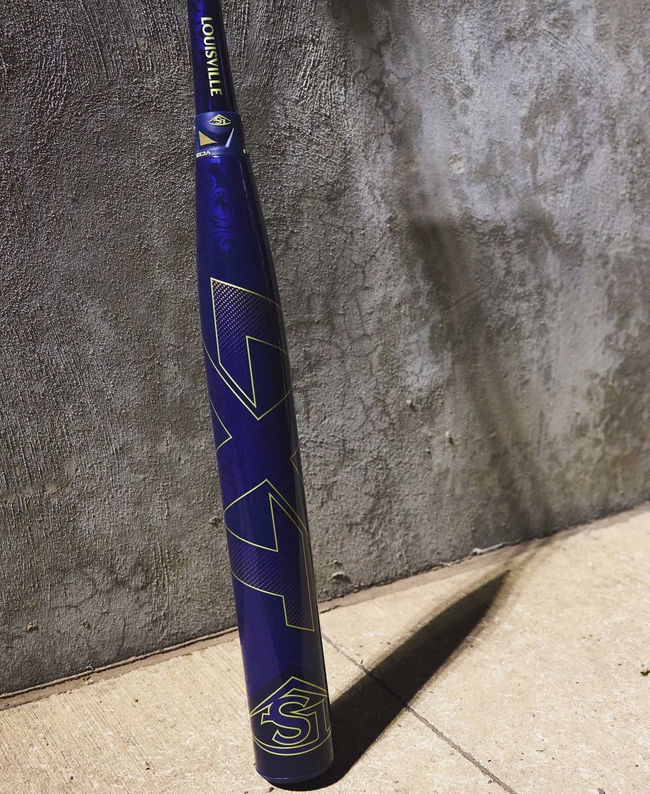
When speed is the name of the game, it doesn’t get much better than the Louisville Slugger LXT. The current LXT lineup keeps building on a formula that’s already proven itself season after season.
Not that there was anything wrong with earlier versions, but this one is just superbly made.
I’ll say this right away: it’s not end-loaded. That means it won’t deliver the same on-demand strike power you’d get from the Easton Ghost Advanced.
But the truth is, the best bats for power hitters need consistency and bat speed just as much as any bat a contact hitter would swing.
My advice: before you write it off because of the balanced design, take a couple of swings with it. I promise you’ll like the feel.
Like older LXT bats, this one uses a three-piece composite design. The PBF Technology Speed Composite Barrel cuts down weight, making it lighter and letting you swing through the zone faster.
That barrel tech also opens up a bigger sweet spot, so you get a clean connection more often than not.
It gives you better pop too, and the VCX2 Vibration Connection System cuts down on stings so you get cleaner feedback when you hit the ball.
The COPA Performance End Cap is another carryover from earlier LXT models, but it’s popular enough that changing it would feel wrong at this point.
The LS Pro Comfort Grip rounds things out. It’s a premium grip that noticeably improves how the bat feels in your hands.
You’ll get better feedback on solid contact, plus less sting and vibration to deal with on the mis-hits.
The main drawback of the LXT is the price tag. It runs $400-$600, which is steep for recreational play. For competitive travel ball, though, it’s a clear winner.
If that’s a bit much, check out the Louisville Slugger Quest Fastpitch Softball Bat instead. It’s far more affordable for an entry-level player and still performs well for the price.
The LXT ships in multiple sizes and weight drops, so pick the one that feels best in your hands. It’s a versatile bat that shouldn’t disappoint you anytime soon.
Details:
- Drop: -8 to -11
- Construction: Three-piece
- Barrel Type: Single disc composite
- Handle Design: Premium LS Pro Comfort Grip
3. Rawlings Mantra Fastpitch Softball Bat
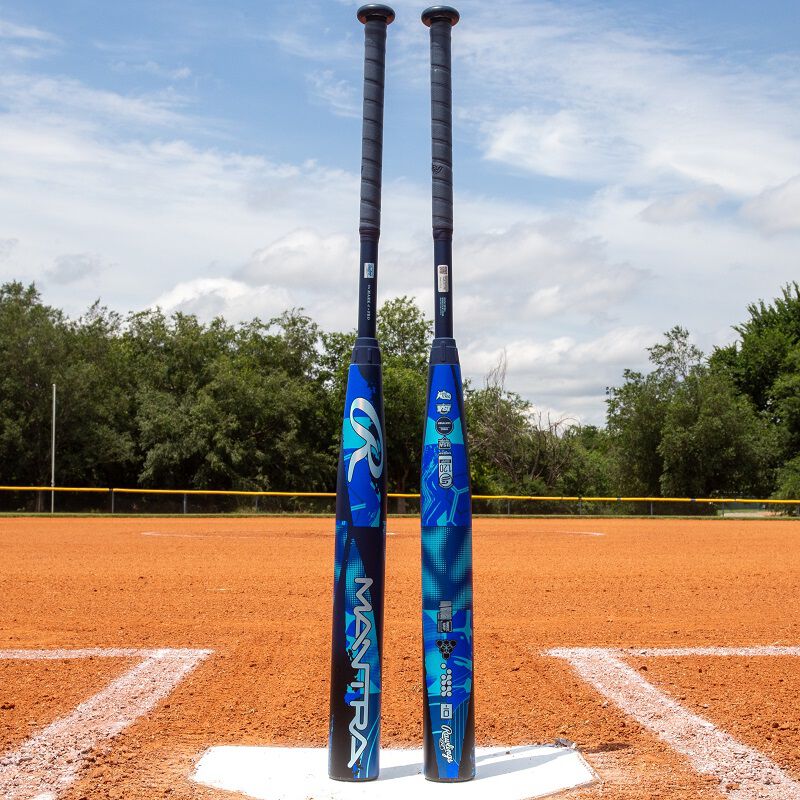
You can’t talk about the best fastpitch bat for power hitters without mentioning the Mantra by Rawlings. This has been a favorite of mine for a long time.
It’s primarily built for contact hitters, but it packs enough of a punch to make it a worthwhile pickup for power hitters too.
The 2026 Mantra keeps its light blue and white color scheme, giving it a subtle but stylish look. It’s a balanced bat, which means you can swing through the zone with high precision and make good contact more consistently.
Since it’s not end-loaded, you’ll need to put in a bit more effort to really send one to the stands. That shouldn’t be a problem for any skilled hitter, though.
The real challenge in softball is always making contact in the first place. This bat makes that part easier, even for a rookie.
It comes with a two-piece composite frame, available in -9 or -10 drop weights. That might look limited on paper, but in practice, you won’t miss the extra options because it already feels well balanced in your hands.
The bat features a three-step inner barrel paired with a thin outer barrel, a devastating combo. The thinner outer wall gives you more pop and better audio feedback on contact.
The F2 Collar connection design also dampens vibration and sting from impact through to the barrel.
To keep the lightweight, balanced feel intact, Rawlings uses an UltraLight End Cap.
Sure, that takes a little power away from the bat, but it lets you swing faster and translate more of your physical strength into the swing itself.
For grip, Rawlings went with LizardSkins, which I prefer over the LS Premium Comfort Grip. Some might disagree, but I never felt any vibration or discomfort handling this bat.
The real highlight here is the balanced design. If you’re playing at the college or high school level, this bat will get you noticed the moment you step into the box.
It’s pricey, running around $400, but most bats at this quality level cost even more.
If you want a cheaper alternative, look at the Rawlings Ombre Fastpitch Bat. It’s an aluminum bat with a bit more sting than I’d like, but it costs under $50, which is great for rookies in little league.
Details:
- Drop: -9 and -10
- Construction: Two-piece
- Barrel Type: Three-step inner barrel, thin outer barrel
- Handle Design: LizardSkins grip
4. DeMarini CF Fastpitch Softball Bat
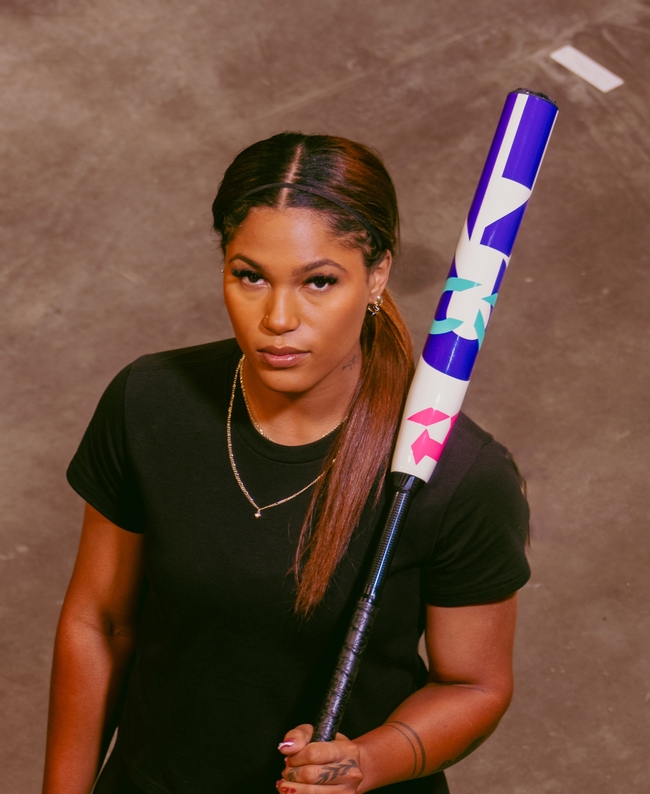
DeMarini has always been a favorite among youth hitters, and I think I know why.
Ray DeMarini, the brand’s founder, wasn’t just a businessman. He was a hitter himself, obsessed with the sport, and that scientific approach to bat-making is still producing some of the best softball bats for power hitters today.
The 2026 CF is a massive fan favorite and one of my go-to bats for any big game. Here’s why it’s such a strong pickup.
First, the construction is a two-piece composite. Nothing new there on its own; plenty of bats have it.
What makes it stand out is the Paraflex Plus Composite Barrel. Compared to other composite designs, this one is genuinely different.
It gives the bat a bigger sweet spot and better barrel control. In other words, it responds instantly to your swing and helps you turn good contact into homers.
The bat also uses Type V connection technology, which improves energy transfer from handle to barrel and cuts down on the sting you’d otherwise feel from a mis-hit.
DeMarini paired that with a Tracer End Cap, a lightweight composite cap that further boosts swing speed and barrel control.
Does it have the most raw power on this list? No. But it offers a better connection, which in my experience matters more for a power hitter than a slightly hotter barrel.
It’s not cheap, and plenty of youth hitters will have a hard time affording it. But for serious players, it’s a small price to pay for top-tier hitting performance.
If the price is still a concern, look at the DeMarini Zenith Fastpitch Bat instead. It’s a solid choice on its own, also a two-piece bat, but with an aluminum alloy barrel. It packs a decent punch thanks to the Big D End Cap, though the alloy construction is an immediate downgrade for me personally.
If you go with the CF, you’ll have plenty of sizes and weight drops to choose from, so you can find the one that feels right at home in your hands.
Details:
- Drop: -8 to -11
- Construction: Two-piece
- Barrel Type: Paraflex Plus composite
- Handle Design: LizardSkins grip
5. Louisville Slugger Meta Fastpitch Bat

When the Louisville Slugger Meta first launched, it took the softball world by storm. In a market dominated by Easton and Rawlings, it suddenly became the hottest new thing.
Years later, the Meta Fastpitch lineup still shows no signs of slowing down.
Why do I love it? For a long time I believed the best softball bat for power hitters had to be end-loaded. This was the bat that proved me wrong.
In fact, it’s the reason I no longer treat swing weight as the be-all, end-all of a power bat’s value.
This bat uses a two-piece, all-composite build. The VTX connection technology links the two pieces together and delivers a more efficient energy transfer from handle to barrel.
That means you can put every bit of power you have behind your swing and still turn it into a legitimate homer.
The Mash composite barrel uses dual-wall construction to boost performance and maximize power.
You might think the balanced swing weight would put a power hitter at a disadvantage, but the larger sweet spot more than makes up for it once you start connecting.
The high-performance F2X End Cap is another underrated detail. It maximizes the barrel profile and gives the bat a stiffer feel.
That’s another reason I recommend trying it at least once if you’re a power hitter. The end cap carries a bit of extra weight, which helps you transfer more energy through the swing.
So despite being a balanced bat on paper, it can deliver swing power on par with end-loaded models.
The handle uses the Premium LS Comfort Grip, common across Louisville Slugger bats. It’s a great grip that cuts vibration on mis-hits and gives you proper control over your swing.
The Meta is available across multiple drops, typically -8, -9, and -10. I personally lean toward -10, but if you’re a dedicated power hitter, I’d recommend one of the heavier options instead.
That extra weight gives you more “oomph” behind each swing, and it also comes in a range of sizes so you can find the one that fits.
It’s not cheap, running as high as $600 in some places, but it’s worth the investment if you’re serious about going as far as you can with this sport. Train hard and put in the work in the cage, and this bat will help you take your hitting to the next level.
Details:
- Drop: -8 to -10
- Construction: Two-piece
- Barrel Type: Dual-wall composite
- Handle Design: Premium LS Pro Comfort Grip
6. DeMarini Prism+ Fastpitch Softball Bat
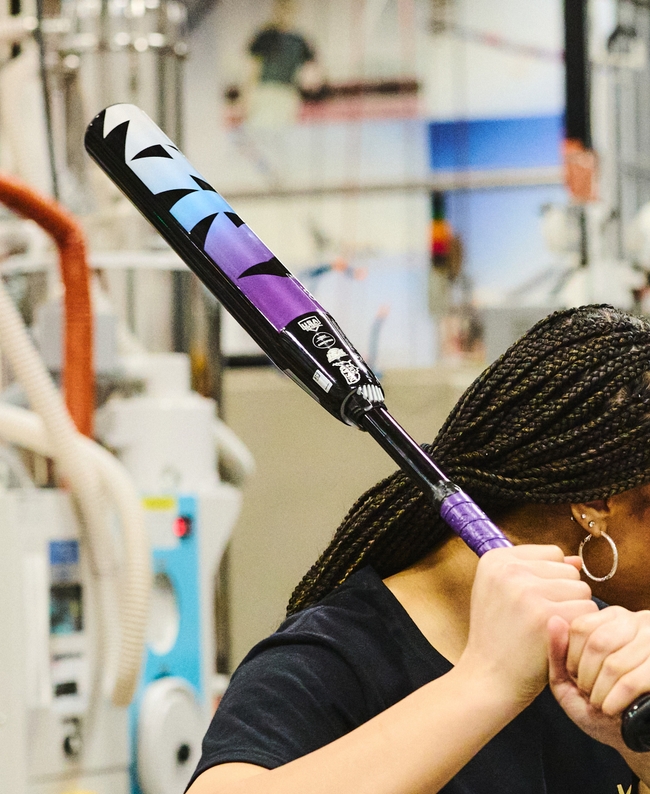
From the brand that brought you the Amethyst, the CF, the Zenith, and plenty of other memorable softball bats comes another great option. The DeMarini Prism+ is a fantastic pickup if you want a strong, powerful hit on every swing.
The first thing I love about this bat is the artwork. It’s not the most important thing to most players, but the psychedelic design gives it a unique look that makes you stand out at the plate.
That’s not the only thing it has going for it, though. It uses a Continuous Fiber Barrel design, meaning each sheet of composite material is rolled onto itself.
That construction gives the barrel better pop, a bigger sweet spot, and a lot more durability.
It also uses a double-walled gapped barrel design up top, which improves the sound off the bat and makes it easier to find the sweet spot consistently.
This two-piece composite bat is a fantastic addition to any hitter’s bag.
DeMarini uses its Type V Connection technology to blend the two pieces together, which complements the responsiveness of the continuous fiber barrel and delivers efficient energy transfer without giving up speed or balance.
The ReFract End Cap is another talking point. It helps you generate better swing speed without sacrificing control, so solid contact sends the ball flying to the stands.
It ships with a synthetic non-insulated grip, which isn’t the best out there but isn’t the worst either. It feels comfortable and dampens vibration reasonably well, though I’d personally swap it out. Replacing the grip tape isn’t hard.
At around $400, it’s a solid deal. You can pick it up in either -10 or -11 drops, and the size options are varied enough to give you plenty of choices.
Details:
- Drop: -10 and -11
- Construction: Two-piece
- Barrel Type: Continuous fiber, dual-wall gapped barrel
- Handle Design: Synthetic
7. Marucci Echo Connect DMND2 Fastpitch Bat

Marucci updated the Echo Connect DMND lineup with the DMND2, and it’s the pick I’m swapping in this year. When I first put the original Echo Connect DMND on this list, I knew it would draw some criticism.
Here’s the truth, though: even if it’s not the outright best bat for power hitters on this list, for hitters still deciding between power and accuracy, this is a fantastic pickup.
It’s not end-loaded, and it doesn’t have the on-demand power you’d get from the Ghost Advanced or the Meta. What you do get is swing consistency, speed, and control. If you already have decent power behind your swing, this bat complements it well.
The DMND2 carries forward the two-piece composite construction and the multi-directional MDX barrel philosophy that made the original DMND popular, refined for a better overall feel and build quality.
Compared to the single-piece Echo, the two-piece build feels miles ahead in durability and performance.
The barrel feels extremely responsive to your swing, has a stronger sound off contact, and gives you a bigger sweet spot to work with.
The handle is also carbon composite, which holds up well and resists vibration on mis-hits. Marucci uses its SDX EXT connection to cut down on unwanted rattling, so you’re not fighting the bat on off-center contact.
It ships in multiple sizes, with drop options ranging from -8 to -11. For contact hitters, the -10 and -11 drops are probably the better fit.
For power hitters, though, I’d recommend the -8 or -9 versions, since they pack more weight behind every swing.
The handle isn’t anything special, which is understandable given the price. It still feels fine, but it can’t compete with LizardSkins or the LS Comfort Pro grip.
The overall look is sharp too, a blend of black, red, and white with a big Marucci logo on the barrel.
And the best part: it typically costs $50-$100 less than the other bats on this list.
Details:
- Drop: -8 to -11
- Construction: Two-piece
- Barrel Type: MDX composite, multi-directional
- Handle Design: Carbon composite, synthetic grip
Pro Tips on Buying the Best Fastpitch Softball Bat for Power Hitters
Softball hitters are often struggling to find the right bat, one that actually fits their playstyle. That’s why I included a mix of options here, for beginners and seasoned veterans alike. Power hitter bats are built differently than balanced bats. Balanced hitters, also known as contact hitters, want to keep moving station to station. Power hitters go for the big swing instead. Here are the core features to look for when you’re shopping for the best fastpitch softball bat for power hitters.
End-Load vs. Balanced Bats
The equation is pretty simple. End-loaded bats have more power than balanced bats, full stop. An end-loaded fastpitch bat carries a heavier end cap, making it top-heavy. When you swing it, that extra weight adds momentum to the barrel and translates into a harder hit.
So if you’re specifically shopping for bats for power hitters, lean toward end-loaded designs. For a deeper look at how the two styles compare on paper, our guide to balanced vs. end-loaded softball bats breaks down the swing-speed tradeoffs in more detail.
That doesn’t mean balanced bats have no power at all. They do, end-loaded bats just have the edge. It also takes time to get used to swinging an end-loaded bat. If you’re struggling to control a top-heavy power bat, go for a balanced bat with good pop instead.
One-Piece vs. Two-Piece Bats
This part is straightforward.
- One-piece fastpitch bats generally out-power two-piece fastpitch bats.
- One-piece bats are made from a single material (alloy or composite).
- Two-piece or three-piece bats combine two or more materials, like composite plus alloy.
Most people prefer two-piece bats because they have more flex. More flex means less vibrational sting on a power hit, so two-piece fastpitch bats sting a lot less than one-piece models.
One-piece fastpitch bats have more raw power, but the sting can be brutal. Hitters with strong forearms or serious upper-body strength can handle a one-piece bat. It’s not for everyone.
Think it through before you go straight for a one-piece bat. Sometimes a two-piece or three-piece bat is the smarter call just to keep the sting manageable. But if you’re confident your arms can take the beating, go for it.
Material Matters: Composite vs. Alloy
The material of a softball bat also decides how much power you’re working with. Softball bats are built from three primary materials:
- Wood
- Alloy/metal
- Composite
I won’t go into all the details here, but composite bats generally have more power thanks to an increased trampoline effect. That’s why exit speeds off a composite softball bat tend to run higher than alloy. If you want the full composite vs. alloy fastpitch bat breakdown, including why alloy still wins on durability and cold-weather performance, check out our composite vs. alloy softball bats comparison.
Weight Drop and Barrel Size
The best weight drop for power hitters usually sits in the -8 to -10 range. A lower (more negative) drop means a lighter bat relative to its length, which is great for bat speed but doesn’t carry as much mass into contact. A power hitter typically wants a heavier bat in hand, meaning a drop closer to -8 or -9, so more mass is moving through the zone on every swing.
If you’re not sure what the number even means, our breakdown of what the drop means on a softball bat walks through the math and how to pick the right one for your size and strength.
Barrel size matters too. Almost every fastpitch bat built for power hitters runs a 2 1/4-inch barrel, the largest diameter allowed under most fastpitch rule sets. A bigger barrel means a bigger sweet spot and more barrel mass behind the ball on contact, which is exactly what a power hitter wants.
Exit Velocity and Batted Ball Speed
These terms trip up a lot of new softball players. Salespeople love to throw them around, and it’s easy to get talked into a bat you don’t actually need. Exit velocity is simply how fast the ball comes off the bat right after contact.
Batted ball speed is a combination of different factors, including exit velocity: pitch speed, sweet spot impact, ball construction, and bat composition all play a role.
- Long story short: higher exit velocity means greater power.
If you can find the manufacturer’s numbers, great. Most of the time you won’t be able to, so don’t let the terminology intimidate you.
Budget Expectations
If you’ve read through everything above, you’ve probably noticed I include both high-end and budget picks. The high-end fastpitch bats are for seasoned hitters who already know what they’re doing. The budget bats are for newcomers still working on their fundamentals.
A top-rated fastpitch softball bat for power hitters typically runs $350-$600. Each model’s exact price depends on size and weight drop, so there’s no single number that fits every bat.
On the budget end, a fastpitch softball bat for power hitters usually runs $50-$250. If you’re shopping budget-friendly, I’d recommend something in the $150-$250 range. The $50 bats are fine for beginners, but a bat in that higher budget range will last longer and perform noticeably better.
Common Questions About Fastpitch Bats for Power Hitters
I’ve tried to cover everything in the breakdowns and buying tips above, but you probably still have a few questions. Here are the ones I get asked the most.
What is the best weight drop for a power hitter?
Most power hitters do best with a drop between -8 and -10. That puts more mass in the bat relative to its length, so you carry more weight through the swing and into contact. Lighter drops like -11 or -12 favor bat speed and contact hitting over raw power.
Should you buy used fastpitch bats?
If it’s a wooden or composite fastpitch bat, no. Power hitters especially should avoid used bats. Wooden and composite fastpitch bats have a lifespan, and a bat built for power loses its pop even faster with heavy use. The longer a power-hitting bat gets used, the less potent it becomes. Contact hitters can sometimes get away with a good used bat, but power hitters shouldn’t risk it.
What is the hottest bat in fastpitch softball?
End-loaded composite bats from the Easton Ghost lineup are consistently among the hottest. Whether you get the current Ghost Advanced or an older Ghost model, the difference isn’t huge. Most Easton composite end-loaded bats come hot out of the wrapper and need little to no break-in.
What softball bats have the most pop?
Composite softball bats have the most pop overall. Wood and alloy bats are decent, but neither matches the trampoline effect a composite barrel produces.
Does a heavier softball bat hit farther?
Yes, a heavier softball bat generally hits farther, as long as you can still control your swing speed. Force equals mass times acceleration, so more mass moving through the zone means more force at contact. A ball hit by a heavier bat typically comes off with better exit speed and momentum, provided the extra weight doesn’t slow your swing down too much.
Is a 2 1/4 inch barrel better for power hitters?
Yes. A 2 1/4-inch barrel is the largest diameter allowed in most fastpitch leagues, and nearly every bat built for power hitters on this list uses one. The larger barrel gives you a bigger sweet spot and more mass behind the ball on contact, both of which help drive the ball farther.
Is ASA/USA or USSSA stamped hotter?
The ASA/USA or USSSA certification stamp has nothing to do with how hot a bat is. It depends on the make, model, construction, and material of the bat. These league stamps mostly control which leagues will let you use the bat, not how much pop it has.
Power Hitters Assemble
Power-hitting is hard. Stringing together homers game after game is a dream for a lot of players, but it’s a tough mountain to climb. You need the skills to knock the ball out of the park, and you need the best fastpitch bat for power hitters backing you up.
Don’t expect a bat to make you the next Dot Richardson. It’s not the bat. It’s never just the bat. It’s the skill, yes, but a good softball bat brings out the potential you already have. It’s not just you hunting down pitchers and smashing everything they throw at you. It’s you and your bat, partners in crime.
Enough coach-speak.
If you want a hot bat that’s ready to hit the ground running, go for the Easton Ghost Advanced. It’s an end-loaded composite powerhouse. The only real issue is durability, so learn how to use it, work the sweet spot, and keep it in good condition.
Not everyone is a highly skilled hitter, though, and if that’s you, try the Louisville Slugger LXT instead. It’s not end-loaded, so it gives up some raw power, but it’s extremely balanced and durable. You won’t have to worry about breaking it, and if you can find the sweet spot, you’ll still rack up home runs.
Both of those bats are money-hungry sharks, though, so these last two picks are for budget hunters.
If you want the best value pick on this whole list, go for the Marucci Echo Connect DMND2. And if you’re chasing that Louisville Slugger feel without the flagship price tag, look at the Louisville Slugger Quest Fastpitch Softball Bat.
Once your bat is sorted, don’t stop there. If you’re a two-way player or coaching younger hitters, it’s worth pairing your bat search with a look at our full composite softball bat rankings for options outside the power-hitter niche.
So get your weapon in order. Practice your swing and your mechanics. And go get that home run. Cheers!

With 4 years of Division II experience, a .272 career batting average, .410 on-base percentage, and 7 home runs, I’m now in my fifth season. I’ve played baseball since age 3, alongside future MLB Draft picks, and I aim to pursue a career in baseball professionally, be it playing, coaching, or scouting.