
Every pitch that comes off a mound is a small act of trust. Your kid trusts the helmet to do its job if a fastball gets away from the pitcher or a foul tip comes back hard. I’ve fitted more youth batting helmets than I can count, for my own kids and for teammates’ kids over the years, and I can tell you the biggest mistakes parents make are buying on looks alone or guessing at size. So I put together this list of the best baseball helmets for youth players, along with a buying guide that covers NOCSAE certification, earflap style, and sizing, so you can walk into the season knowing your player’s head is actually protected.
Top 5 Best Baseball Helmets for Youth in 2026
1. EASTON Z5 2.0 Batting Helmet

This is the youth batting helmet I recommend most, and it’s the one I’d buy again for my own kid. It’s NOCSAE certified, so it clears the safety bar every league requires, but what actually sold me is the fit and how it handles repeated foul-tip contact over a full season.
The dual earflap design covers both ears, which matters if your player ever switches sides of the plate or just plays multiple positions on different days. There’s also a jaw guard that snaps on for extra coverage without adding much bulk.
Inside, Easton uses a dual-density impact absorption foam that actually softens hard contact instead of just claiming to. It’s noticeably firmer near the shell and softer against the head, which is the combination you want.
The BioDri liner wicks sweat well, so during August practices this doesn’t turn into a soggy mess by the third inning. That alone makes it worth the extra few dollars over the bargain-bin options.
Ventilation is solid too, with vents cut on both sides of the shell. The ABS outer shell is light without feeling cheap, and it’s held up fine through a full spring and fall season in my experience.
It comes in a good range of colors, so you can usually match team gear without settling for whatever’s left on the shelf.
More Details:
- NOCSAE Certified: Yes
- Earflap: Dual (both ears covered)
- Suitable for: Right and left-handed batters
- Inner Material: Dual-density impact absorption foam
- Outer Material: ABS shell
2. Under Armour Converge Batting Helmet
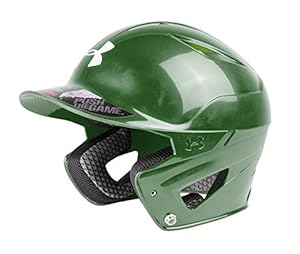
The Under Armour Converge is the helmet I point parents to when they want something that looks sharp without cutting corners on protection. It’s an SEI-certified helmet that meets NOCSAE standards, and the ABS shell shrugs off the everyday bumps a dugout throws at it.
It’s a dual earflap helmet, so players can switch batting positions without swapping gear. In my experience that’s a small detail that saves a lot of hassle for kids who are still figuring out which side of the plate feels right.
Inside, Under Armour uses a thick shock-absorbing foam that protects the skull without making the helmet feel heavy on a kid’s neck. The foam also has anti-odor treatment built in, which is genuinely nice after a hot doubleheader.
It doesn’t ship with a jaw guard or facemask, but both are easy to add on separately if your league requires one or your player wants extra coverage.
Under Armour offers this in a full range of youth sizes and a wide set of colors, including white, red, and blue, so fitting it correctly shouldn’t be a problem.
More Details:
- NOCSAE Certified: Yes (SEI-certified)
- Earflap: Dual (both ears covered)
- Suitable for: Right and left-handed batters
- Inner Material: Thick shock-absorbing foam
- Outer Material: ABS shell
3. Easton Alpha Batting Helmet
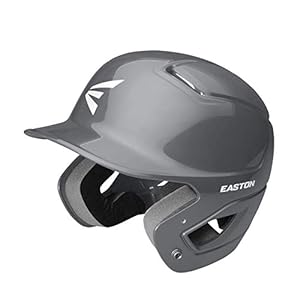
If your little one is just starting out, the Easton Alpha is the tee-ball and early youth helmet I’d hand them. The ABS shell is impact-resistant and sturdy without feeling oversized on a smaller head, which is a common complaint with entry-level helmets.
I like the vent layout here. There are enough air channels cut into the shell that younger players don’t fight the helmet on hot afternoons.
The inner foam is impact-resistant and moisture-wicking, protecting the ears and skull from hard pitches while keeping sweat from turning into a distraction mid-game.
It’s a dual earflap design, so beginning players can switch sides of the plate as they’re figuring out their stance. It’s NOCSAE certified and appropriate for all levels of youth play, from tee ball on up.
Pre-drilled holes on both sides make it cage-compatible if you want to add a facemask later. Easton also sells an updated Alpha 3.0 with a facemask included, worth a look if you know from day one your player wants that extra coverage.
More Details:
- NOCSAE Certified: Yes
- Earflap: Dual (both ears covered)
- Suitable for: Right and left-handed batters, tee ball through youth levels
- Inner Material: Dual-density impact absorption foam
- Outer Material: High-impact ABS hardshell
4. Rawlings Coolflo Batting Helmet
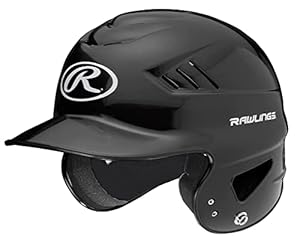
Rawlings has the best budget pick on this list, and cheap doesn’t mean corners were cut here. The outer ABS shell is durable and holds up fine against everyday hard contact.
It’s built with two earflaps, so it works for players who switch positions at the plate. The inner foam does its job on both comfort and protection, and I haven’t seen it break down after a season of regular use.
Rawlings cut 15 individual air vents into the shell, and it genuinely keeps the head cooler than most helmets in this price range. You can even wear it over a ponytail by pulling hair out through a vent, which parents of girls playing baseball or fastpitch will appreciate.
The dual-density foam handles sweat well enough for longer practices, and this Coolflo is NOCSAE certified, which is really the only non-negotiable box a helmet needs to check.
You can bolt on a Rawlings mouth guard or facemask if your league wants extra coverage. Fit and finish feel better than the price tag suggests, and it comes in enough colors that it won’t look like the leftover option on the rack.
More Details:
- NOCSAE Certified: Yes
- Earflap: Dual (both ears covered)
- Suitable for: Right and left-handed batters
- Inner Material: Dual-density foam
- Outer Material: ABS shell
5. EvoShield XVT Batting Helmet with Facemask

For players who need the most coverage, the EvoShield XVT with facemask is where I’d point you. It comes with a broad facemask built in, which keeps a mishit or a bad-hop pitch from reaching the face at all.
The ergonomic design keeps it comfortable enough for a full practice, and it doesn’t sit as bulky as some other caged options I’ve tried on youth players.
The outer shell is durable ABS, and the inner liner is compression-molded foam. EvoShield laid out the vents strategically so airflow stays decent even with the facemask attached.
It’s SEI-certified and meets NOCSAE standards, so you’re not trading safety for the extra protection. This is a dual earflap helmet as well, good for tournament play where players see a lot of pitches in a short window.
The low-profile shell gives it a clean fit rather than the oversized look some facemask helmets have. It doesn’t come in a huge range of sizes, so double-check your player’s head circumference against Easton and EvoShield’s own size charts before you order.
More Details:
- NOCSAE Certified: Yes (SEI-certified)
- Earflap: Dual (both ears covered)
- Suitable for: Right and left-handed batters
- Inner Material: Compression-molded foam
- Outer Material: ABS shell with built-in facemask
How to Choose the Best Youth Baseball Batting Helmet
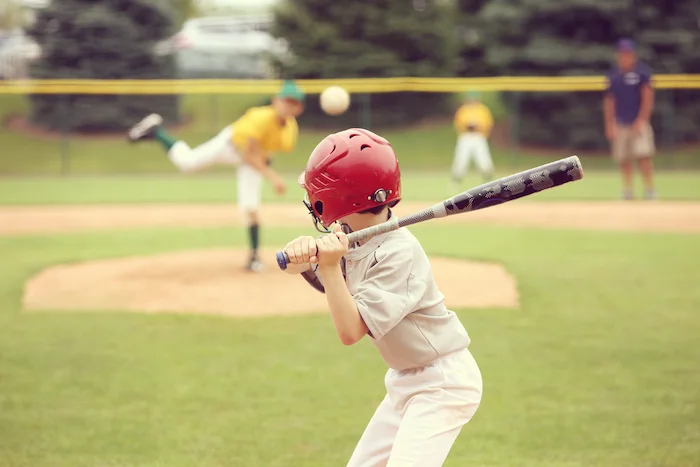
The hardest part of buying a youth batting helmet isn’t the brand, it’s the size. A helmet that’s too big shifts on contact and one that’s too tight gives a kid a headache by the third inning, and either way it can affect the player’s performance.
Getting the fit right isn’t complicated once you know what to check. Here’s what I look at every time.
It Should Meet NOCSAE Standards
Only shop from helmets that meet NOCSAE standards, full stop. The National Operating Committee on Standards for Athletic Equipment tests batting helmets against its ND022 standard, which measures how much impact energy the shell and padding absorb from a pitched or thrown ball.
A NOCSAE-certified youth batting helmet carries a permanent certification mark inside the shell, usually backed by independent testing through the Safety Equipment Institute (SEI). If you don’t see that mark, don’t buy it, no matter how good the price looks.
Earflap (One vs. Two)
You’ll find single-flap and dual-flap batting helmets on the market. Single-earflap helmets work for players locked into one batting stance. Right-handed batters need the flap on the left, and left-handed batters need it on the right.
Young players who switch sides of the plate, or who aren’t sure which side they’ll settle into yet, should go with a dual earflap helmet. I’d recommend two flaps for almost every youth player since it protects both ears no matter what happens at the plate.
Size
Size is where most parents get tripped up. A batting helmet needs a snug fit, not a loose one, so always check the manufacturer’s specific size chart before you order rather than guessing from the box label.
Measure your player’s head circumference with a soft measuring tape, wrapping it around the forehead and back around to where you started. Youth helmet sizing generally runs from a small tee-ball fit up through a junior or youth size, so match that measurement against the exact chart for the helmet you’re buying, since sizing isn’t identical across brands.
Caged Helmets and Facemasks
Some players want a facemask or cage for added protection, and some avoid it because it feels like a distraction at the plate. Both are valid, it really comes down to the player.
Most caged or facemask helmets use a removable attachment, so you can add or pull it depending on league rules or your player’s preference. Some helmets, like the Easton Alpha, come pre-drilled for a cage even if you don’t buy one right away.
Material
Nearly every batting helmet on the market uses an ABS outer shell because it’s lightweight and durable without adding weight to a kid’s neck. Check the inner liner too, since that’s usually advanced foam, gel, or a foam-fabric combination, and it’s doing most of the actual impact absorption.
Brand
Stick with reputable brands like Easton, Rawlings, Under Armour, and EvoShield. These companies have a track record with NOCSAE testing and stand behind their gear, which matters a lot more with safety equipment than with a bat or glove.
Budget
Set a budget before you start browsing. Youth batting helmets range from affordable to premium, but don’t chase the cheapest option just to save a few dollars on safety gear. A NOCSAE-certified helmet in the mid-range price bracket will outlast a bargain no-name one anyway.
While you’re outfitting your player, it’s worth rounding out the rest of the batting gear too. A good pair of youth baseball batting gloves improves grip and takes some sting out of contact, and it’s an easy add once you’ve already got the helmet sized correctly.
One more thing worth knowing: a batting helmet is not a substitute for catcher’s protection. If your player also catches, they need gear built for repeated impact from pitches in the dirt and foul tips, not a batting shell. Check out my picks for the best catcher’s gear for youth players if that’s on your shopping list too.
Wrapping It Up
These are the best youth baseball helmets I’d put on a kid’s head this season. Every one of them comes from a reputable brand, is NOCSAE certified, and holds up to real practice and game use, not just a shelf display.
Get the size right first. That’s the step parents skip most often, and it’s the one that actually determines whether the helmet does its job. If you want my single pick, go with the EASTON Z5 2.0 Batting Helmet. It’s the most durable of the bunch and strikes the best balance of comfort, protection, and fit for most youth players.

With 4 years of Division II experience, a .272 career batting average, .410 on-base percentage, and 7 home runs, I’m now in my fifth season. I’ve played baseball since age 3, alongside future MLB Draft picks, and I aim to pursue a career in baseball professionally, be it playing, coaching, or scouting.