
Here’s the thing about a $200 budget: it covers a massive range of gloves, everything from $30 department store mitts all the way up to gloves that are actually worth your money. So when I say “best baseball glove under $200,” I need to be specific about what that actually means.
If you’ve got up to $200 to spend, you can walk away with a genuinely good baseball glove, one that lasts a full season (or several) if you take care of it. That’s speaking from experience, not a sales pitch. I updated this list for 2026 after checking current pricing and availability on every glove below, so you’re not chasing a discontinued model or a price that no longer exists.
The $1 to $200 range is huge, so when I put this list together I made sure to cover the full spread: budget gloves in the $50 to $85 range, and mid-range gloves that push closer to the $200 ceiling. Don’t write off the first pick just because it looks affordable. The good stuff is further down too.
One heads-up before we dive in. If you’re hoping for a premium, pro-level glove and your budget is closer to $250, it’s worth reading our baseball glove under $150 guide too since a lot of these same brands make gloves across multiple price points. And if $200 is more than you want to spend, our roundup of the best cheap baseball gloves under $100 covers the entry-level end of the market. But if a solid mid-range, best-baseball-glove-for-the-money pick is what you’re after, keep reading.
Top 5 Best Baseball Gloves Under $200 in 2026
Before you scroll down with high hopes, a quick reality check. Most of the gloves on this list are excellent budget-to-mid-range picks for general and competitive play, not top-shelf gloves like the Rawlings Heart of the Hide or Wilson A2000.
So if you’re hunting for a premium glove, this isn’t the list for you. But if you want the best value you can get for under $200, whether that’s an affordable baseball glove for a rec-league player or a serious infield glove for a travel-ball kid, keep scrolling.

1. Rawlings Player Preferred Baseball Glove
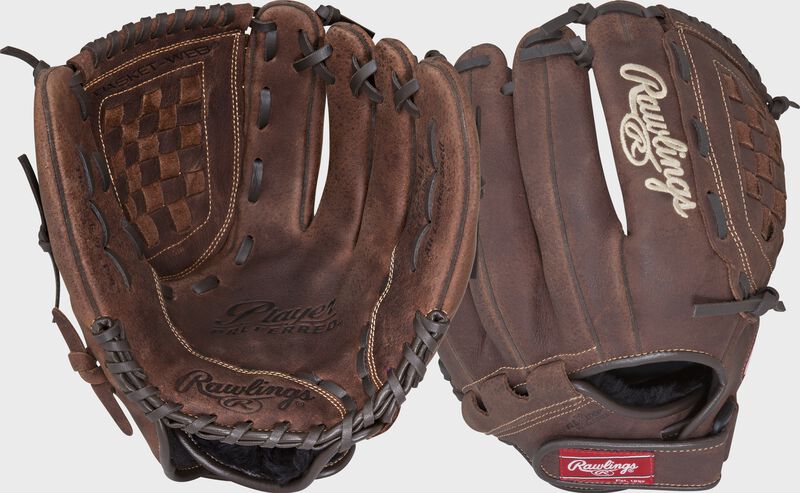
Since we’re on the subject of budget-friendly gloves, let’s start with a favorite: the Rawlings Player Preferred. Since 2013, two glove brands have basically run the MLB scene, and Rawlings is one of them. But despite their success at the pro level, they still keep an eye out for players on a budget.
The Player Preferred does exactly that, currently listed around $85 direct from Rawlings, which makes it one of the more affordable baseball gloves worth taking seriously. Sure, corners had to be cut somewhere to hit that price, but when you’re out there in a competitive game, this glove is capable enough to back you up.
I’ve recommended this glove on BaseballHover so many times I’ve lost count. But don’t take my word for it, look at the specs. Right away you’ll notice the full-grain leather construction. It feels firm and holds up well, and with a bit of regular maintenance it can last a couple of seasons without issue.
Compared to gloves made of steer hide or kip leather, full-grain leather doesn’t sound as flashy, but this glove costs a fraction of what those materials would run you, and at this price point, full-grain is genuinely solid.
If you’re impatient to start playing, you’ll like that it comes roughly 80 percent broken in from the factory. A couple of days of playing catch takes care of the rest. It stays lightweight too, at around 1.3 pounds, and it includes Zero Shock Palm padding to cut down on impact sting plus an adjustable wrist strap for a snugger fit.
This glove works for adults and teens, though the smallest size runs around 12 inches, which can feel large for younger players. For adults, the size range up to 14 inches is close to perfect, and you get several color and web options to choose from. Overall, the Rawlings Player Preferred remains one of the best baseball gloves under $200 for entry-level and budget-minded players alike.
Details:
- Price: Around $85
- Webbing Options: Closed, H-Web, Basket, Single-post Double bar
- Special Features: Zero Shock Palm Padding, adjustable wrist strap, roughly 80% factory broken-in
2. Marucci Acadia M-Type Baseball Glove
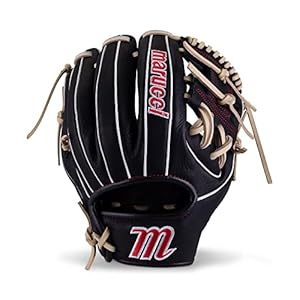
If you keep track of the top baseball brands, seeing Marucci here might surprise you. This brand usually makes gloves for professionals, with most of its lineup aimed at a pretty narrow, high-performance crowd.
Well, the Acadia M-Type is your chance to own a Marucci glove without blowing your whole $200 budget. It’s still sold new for the 2026 season and it typically runs under $100, which is a genuine steal for the brand.
Just because this glove retails for less doesn’t mean Marucci cut corners on materials. They have a reputation to protect, and the full-grain cowhide leather shell paired with a leather palm lining backs that up.
This is arguably the best material selection on this whole list. It’s built to last a good couple of seasons, and as long as you keep up with conditioning, the leather shouldn’t start cracking anytime soon.
Comfort is worth mentioning too. It comes with a smooth microfiber lining at the wrist and finger area to help you keep a solid grip. It’s also fairly light at around 1.06 pounds, which makes it workable for both adult and youth players, and honestly, it makes a nice gift for a serious baseball fan.
Since it’s made of cowhide, it does take a while to break in. But once you’re through that process, it feels excellent in your hand. If I had to nitpick, the size options are limited, so if none of the four available sizes fit, you’ll need to look elsewhere.
Details:
- Price: Typically under $100
- Webbing Options: H-Web, single post, I-Web
- Special Features: Leather palm lining, microfiber lining in the wrist and finger area
3. Mizuno MVP Prime Baseball Glove
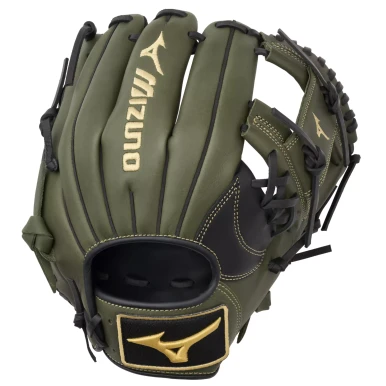
Next up is a glove that stuck with me through most of my high school years: the Mizuno MVP Prime. This is the first pick on this list to cross the $100 mark, currently listed around $130 direct from Mizuno, and frankly the quality outpaces what they’re asking for it.
Mizuno doesn’t have the same grip on the market as Rawlings or Wilson, but don’t let that fool you into overlooking the MVP Prime as a serious infield glove under $200.
The real highlight is the Bio Soft leather construction, a proprietary Mizuno leather that’s softer than typical full-grain but still firm enough to protect your hand from impact. It also carries a bit of natural oil that keeps the material smooth and supple with regular use, and honestly, it competes with leather found on gloves well above this price range.
The downside is that break-in takes longer here than with anything else on this list. To me, that’s a small price to pay for the upgrade in feel, and plenty of players consider breaking in a new glove part of the fun rather than a chore.
Other nice touches include a guided center-pocket pattern that helps you break the glove in evenly, and a PlusGrip Thumb for extra padding. It’s a small addition, but it noticeably improves the overall feel.
Sizes run from 11.5 to 12.75 inches, a narrower range, but the MVP Prime is built mostly for adult and advanced youth infielders, so that’s forgivable. Mizuno also uses its own naming system for webbing, so it’s worth doing a little research before picking a style.
Details:
- Price: Around $130
- Webbing Options: Deep III web, Tartan web, Shock web, Shock 2 web
- Special Features: Bio Soft leather, center pocket pattern design, PlusGrip thumb
4. Wilson A500 Youth Baseball Glove
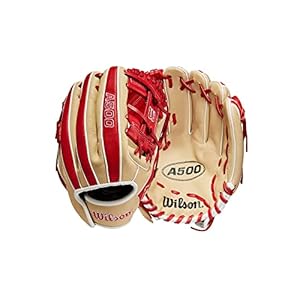
Remember how I mentioned there’s another brand besides Rawlings that dominates the MLB glove scene? That’s Wilson, and just like Rawlings, they cater to budget-minded buyers too, even though their name is mostly tied to pro-level gear.
If you know your gear, you’ve probably heard of the Wilson A2000, an extremely popular glove among competitive youth and adult players. The A500 is essentially a toned-down version of that same design, built for younger players who want a solid budget glove.
The A500 uses synthetic leather, and while that might sound like a downgrade, the quality here is genuinely impressive. I’m not usually a fan of synthetic leather, but if I didn’t already know, I’d have guessed this was real leather.
Of course, synthetic leather won’t last quite as long as something like the Rawlings Player Preferred, even with good care. But you get the upside too: essentially no break-in time. You can start playing with it right out of the box, which matters a lot for parents shopping for a kid who wants to play catch that same afternoon.
It’s also extremely light, weighing under a pound, which is a big plus for younger players, especially kids under eight. The double-palm construction gives the pocket better stability, helping less experienced players learn to catch more consistently.
One thing to know: it’s only available in sizes between 10.5 and 12 inches, so adults will likely need to look elsewhere. But for the right age group, it’s a genuinely good stepping-stone glove before moving up to something more advanced.
Details:
- Price: Budget-friendly, typically under $50
- Webbing Options: H-Web, Dual Post Web, Two-Piece Closed Weave Web, Single Post 3 Bar w/Lacing
- Special Features: Double palm construction, redesigned hand opening, minimal break-in
5. Franklin Sports Field Master Baseball Glove
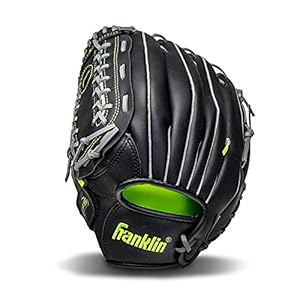
If your budget is as tight as it gets, under $50, there’s really only one glove on this list that makes sense: the Field Master from Franklin Sports.
Franklin isn’t a top-tier glove brand, but it’s a respectable one that’s been making reliable baseball and softball gear for years, and for the price, this glove is genuinely decent.
It holds up over time and can last a couple of seasons with reasonable care. It’s made of synthetic leather, and while the quality is solid for the category, it won’t feel quite as good as real leather in your hand.
That said, it’s built for entry-level players who just want a reliable, affordable glove without the commitment of a $150+ purchase. Synthetic leather has real advantages here too, mainly the practically nonexistent break-in period. You can take it out of the box and start playing with it right away, no mallets, no hours of playing catch just to soften it up.
It’s also extremely lightweight, to the point you barely notice you’re wearing it. That might sound like it means thin padding, but the impact protection is better than you’d expect. The hand-formed pocket gives you a better grip and more responsive feel, and the adjustable wrist strap lets you dial in a custom fit.
It comes in a handful of webbing types depending on your position, and sizing runs from 10 inches for youth players up to 14 inches for adults, with five color options to choose from.
Details:
- Price: Typically under $50, the most affordable pick on this list
- Webbing Options: Basket, Trapeze, Modified Trapeze, I-Web
- Special Features: Hand-formed pocket, adjustable wrist strap, virtually no break-in
Comparison Table: Best Baseball Gloves Under $200
If you just want the short version, here’s how the five gloves stack up side by side.
| Glove | Best For | Price | Leather | Weight |
|---|---|---|---|---|
| Rawlings Player Preferred | Best overall value | ~$85 | Full-grain leather | ~1.3 lbs |
| Marucci Acadia M-Type | Best premium feel for the money | Under $100 | Full-grain cowhide | ~1.06 lbs |
| Mizuno MVP Prime | Best infield glove under $200 | ~$130 | Bio Soft leather | ~1 lb |
| Wilson A500 | Best youth/beginner glove | Under $50 | Synthetic leather | Under 1 lb |
| Franklin Field Master | Best rock-bottom budget pick | Under $50 | Synthetic leather | Ultra-light |
What to Look for When Buying the Best Baseball Glove Under $200
Frankly, $200 is a solid budget for a new baseball glove. Sure, there are pricier options that offer more, but at this budget you can pick up a genuinely good mid-range glove that’ll serve you well for at least a season, often more.
To get the most out of that budget, you need to know which features are actually worth prioritizing. Here’s a quick rundown of what to focus on when shopping for a baseball glove under $200.
Construction Material is the Highest Priority
Whenever I’m shopping for a baseball glove, I start with a close look at the construction material. Most gloves are made of leather, but the quality of that leather makes a huge difference in how long the glove lasts and how comfortable it feels over a full game.
Let’s run through the common materials you’ll see on baseball gloves under $200.
Synthetic Leather
If you want to save money on your gear, a synthetic leather glove is a solid choice. The main upside is that these gloves need little to no break-in. The downside is that they’re not as durable as genuine leather and don’t feel quite as good in your hand over time.
Full-Grain Leather
Full-grain leather is your first real taste of what actual glove leather feels like. It’s a classic material used across a lot of popular gloves on the market. It feels heavy and stiff at first, but after breaking in, it molds to your hand nicely. There are plenty of good options in this price range, and it’s a lot cheaper than steer hide or cowhide.
Cowhide Leather
If you want a real step up from full-grain, cowhide leather is the way to go. It’s lighter and more flexible than full-grain while also being more durable. It costs a bit more, but the extra cost is usually worth it. You’ll likely be pushing the top end of a $200 budget for a full cowhide glove, but it’s a strong choice nonetheless.
Steer Hide Leather
Steer hide leather is the most expensive material you’ll find on gloves under $200, and it’s my personal favorite. It’s noticeably heavier than cowhide and requires a longer break-in period, but gloves made with it are extremely durable. If your budget allows it, I’d personally lean toward steer hide or cowhide. For a deeper look at how these two compare, our kip vs steerhide breakdown covers the differences in detail.
Make Sure the Glove Fits (Infield vs Outfield Sizing)
Baseball gloves come in a range of sizes, and it matters that you pick the right one for your hand and position. If you’re stuck between two sizes, go with the smaller one. A glove that’s too big just feels awkward and slows you down.
Sizing also depends heavily on where you play. Infielders generally want a smaller, shallower glove for quick transfers, while outfielders want something bigger with a deeper pocket to run down fly balls. Some gloves come with an adjustable wrist strap for extra flexibility, and you can always redo the laces to tighten things up a bit, though that won’t fix a glove that’s fundamentally too big for your hand.
How Long is the Break-in Period?
If you’ve got a big game coming up, think about how long it’ll take to break in your new glove. If the break-in period is too long for your timeline, you’re better off going with a different option.
Break-in time depends mostly on the construction material. Steer hide takes the longest, while synthetic leather needs practically none. I personally enjoy taking my time to break in a new glove exactly the way I want it, but if you’re the impatient type, a game-ready glove is going to give you a better experience.
Check its Padding
The leather shell of a glove offers decent protection on its own, but that’s rarely enough when you’re getting hit with hard line drives and fly balls over and over. So if you want your hand protected, make sure the glove has decent padding.
There’s a tradeoff though: thicker padding means a heavier glove, so you’re trading some mobility for protection. Outfielders usually prefer thicker padding since they have more time to react, while infielders tend to go lighter for a faster, more responsive feel.
Pocket Depth & Comfort is also Important
A mistake I see a lot of new players make is ignoring pocket depth. That’s a bigger deal than it sounds. When you catch a baseball, you’re using the pocket to secure it, and a deeper pocket makes catches easier to hold onto. A shallower pocket lets you transfer the ball to your throwing hand faster.
Your position drives this decision. Outfielders need to track high balls, so they usually go with a deeper pocket. Infielders want a quicker transfer, so they typically prefer a shallower one.
Choose the Webbing That You Want
With everything else checked off, think about which webbing style you want. There are quite a few types out there, and our complete breakdown of baseball glove web types is a good place to get up to speed if you’re not familiar with them.
Webbing depends somewhat on your position, but you’ve got more flexibility here than with sizing. Go with whatever feels most comfortable to work with, and if you’re not sure, ask your coach. They’ll usually have a good sense of what fits your playstyle.
Frequently Asked Questions
Is a $200 baseball glove worth it?
For most rec-league, high school, and travel-ball players, yes. A $200 budget gets you into full-grain or cowhide leather construction with better padding and web options than anything under $100. You won’t get a pro-level Heart of the Hide or A2000, but you’ll get a glove that performs well and holds up for multiple seasons with proper care.
What is the best infield glove under $200?
The Mizuno MVP Prime is our top pick for infielders under $200. Its Bio Soft leather offers a firmer, more responsive feel than typical full-grain leather, and the smaller size range (11.5 to 12.75 inches) suits infield play well.
What is the best outfield glove under $200?
The Rawlings Player Preferred is a strong outfield choice since it’s available up to 14 inches, giving you the deeper pocket outfielders need to track fly balls. It also comes about 80% broken in from the factory, so you’re game-ready faster.
How long does it take to break in a baseball glove under $200?
It depends on the leather. Synthetic leather gloves like the Wilson A500 or Franklin Field Master need almost no break-in time. Full-grain leather gloves like the Rawlings Player Preferred usually take a few days of playing catch. Cowhide or Bio Soft leather gloves, like the Marucci Acadia or Mizuno MVP Prime, can take a couple of weeks of regular use to fully form to your hand.
Is full-grain leather or cowhide leather better for the money?
Full-grain leather offers the best value for a tight budget and is plenty durable for recreational and school-level play. Cowhide leather costs more but is lighter, more flexible, and holds up longer under heavy use, which matters more if you’re playing travel ball or multiple seasons a year.
What’s a good budget baseball glove if $200 is still too much?
Check out our guide to the best cheap baseball gloves under $100 for solid options below the $100 mark, including the Franklin Field Master and Wilson A500 covered in this list.
With Everything Said and Done
I know some people will tell you $200 isn’t enough for a “real” baseball glove. Ignore them. You have nothing to feel bad about with this budget.
Sure, there are pricier options out there, but gloves like the Mizuno MVP Prime or Marucci Acadia deliver excellent value for what you pay. And the Rawlings Player Preferred is always a dependable, no-fuss option if you just want something that works.
So the best baseball glove under $200 really comes down to what you need out of it. I can point you in the right direction, but only you know your position, your hand size, and how much you’re willing to spend on break-in time.
That’s everything I’ve got for you. There are plenty of baseball gloves under $200 out there. I’ve narrowed it down to five that I’d actually recommend, so use these picks as your starting point and go from there.
Hope you find the right one. Cheers!

With 4 years of Division II experience, a .272 career batting average, .410 on-base percentage, and 7 home runs, I’m now in my fifth season. I’ve played baseball since age 3, alongside future MLB Draft picks, and I aim to pursue a career in baseball professionally, be it playing, coaching, or scouting.